

The Legacy of Textile and Garment Workers on Women's Suffrage
On March 8, we recognize International Women's Day, a celebration of women everywhere who are working, creating, leading, dreaming, and literally everything else.
Originally called International Working Women’s Day, this day is rooted in something very familiar to us at Stitchworks: garment factories, textile labor, and women who made their living with a needle, some thread, and their skill.
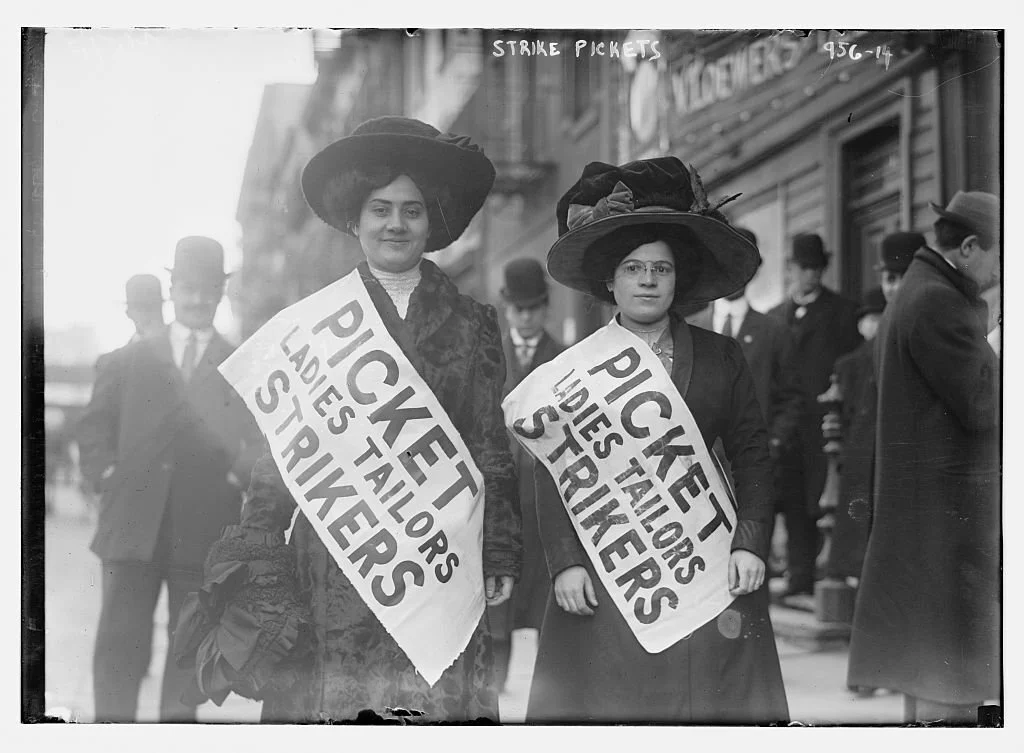
Strikes, ladies tailors, N.Y., Feb. 1910, picket girls on duty - via Library of Congress
Many of the women who helped spark this international holiday were fed up, tired of working in garment factories and sweatshops under unsafe conditions, for unfair pay, and with very little protection, so they fought. It wasn't just fighting for better hours or wages, they were fighting for the right to work at all, and to be treated with dignity while doing it.
We’re all here because we love sewing and the joy of creating. But, whether you identify as a woman or not, it’s worth pausing to recognize the people who paved the way for sewing to exist in our lives as an art form rather than a necessity.
It is crucial to also recognize that, even today, over 80% of work by the global garment industry is by women who still face injustice in their industry, especially in countries like Bangladesh, Vietnam, and Cambodia.
Progress in America dates all the way back to New York in 1909 with the Uprising of 20,000, a strike by women garment workers to demand better pay and working conditions. Tragedies like the infamous Triangle Shirtwaist Factory fire of 1911 were also instrumental in pushing reforms for safe working conditions in garment and textile factories, which were overwhelmingly staffed by women.
It took over 70 years after these events for International Women's Day to be recognized by the United Nations. Women of the International Ladies' Garment Workers' Union and the Women's Trade Union League were key activists to see this change through.
This history matters because the tools we use, the skills we practice, and the spaces we gather in didn’t appear out of nowhere. They were shaped by women who organized, protested, stitched, and demanded better futures for themselves, but also for the generations after them.
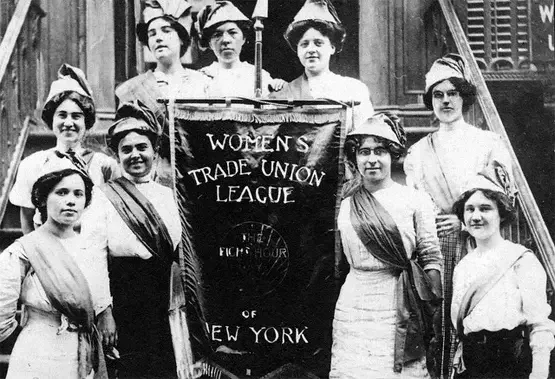
Members of the Women's Trade Union League (WTUL) of New York pose with a banner calling for the 8 hour day, 1910 estimated - via Flickr
