

Sewing for Survival: Betsy Ross’ Dedication to her Craft
The fourth of July just passed and all stitchers, sewers, and tailors are thinking the same thing: what was it like for Betsy Ross to create that first American flag? (Okay, that might not be on your mind, but it has been on mine!)
Well, as it turns out, Ross probably didn’t create the original flag. This reputation came from an anecdote re-told by her grandson almost a century later. But even though the flag may not be in her design portfolio, her successful colonial business is something to make us feel inspired.
The First American Flags:
In case you slept through history in elementary school, the story told around the country is as follows: While looking for someone to create the first flag George Washington stumbles upon Ross. He tasks her with a special, secret mission and she creates the first iteration of the American flag. She is one of the few women in the Revolutionary War era that children learn about and is a beloved classic in the classroom.
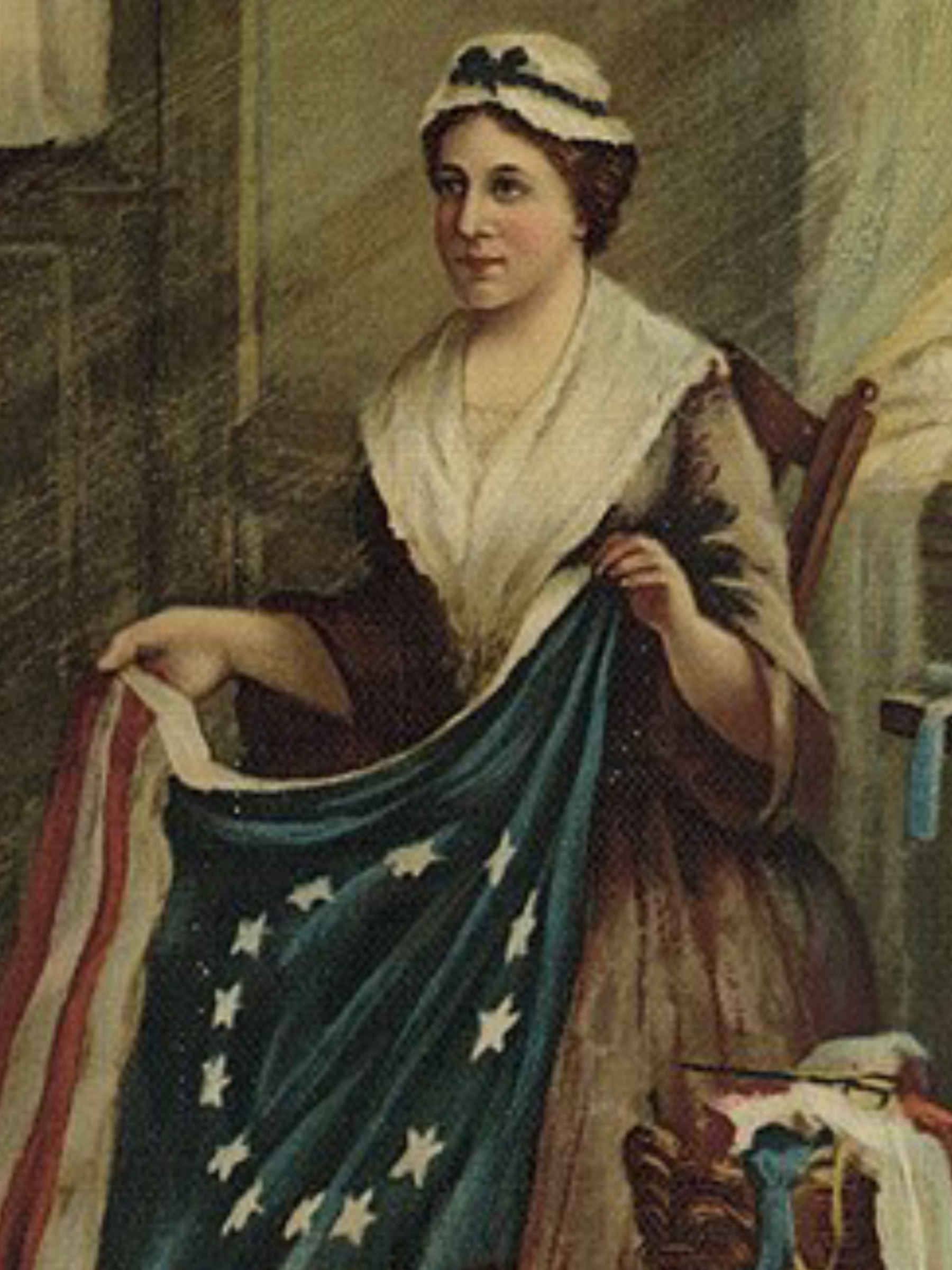
A cropped image of Charles Weisgerber’s “Birth of our Nation’s Flag” (1911).
Note: there are very few, if any, images of Ross before she passed. In 18th and 19th century America, those who were not rich or powerful were rarely documented.
End of story. Right?
Not so fast. What educators often leave out is that this story is likely a myth, or at least an exaggeration. In fact, there is no official evidence that Ross created the first flag. (However, looking into the “did she, didn’t she” debate from Historic Pennsylvania Inc. will keep you on your toes.)
But at the end of the day, whether or not Ross created the first flag, her upholstery business was powerful. It kept her family alive and was a piece of her community.
In fact, her business may be more revolutionary than that first flag.
Ross’ Story:
According to the National Women’s History Museum, Ross was born eighth of seventeen children in a Quaker household. She grew up watching her father perfect his trade in carpentry and attended a Quaker school where she learned the basics of home economics—this included sewing and upholstery.
She continued growing in these skills via an apprenticeship with popular upholsterer John Webster. During this apprenticeship, she fell in love with another apprentice named John Ross. But John did not follow the Quaker religion, meaning marriage between the two was forbidden in the eyes of Betsy’s family. However, the two went against her family’s wishes and married.
This decision caused twenty-one-year-old Ross to split away from her family as they found her decision to be disgraceful. But with her husband on her side, the two opened a successful upholstery business. Unfortunately, only three years after marrying, John passed away during the war in the Pennsylvania militia, wounded by an explosive.
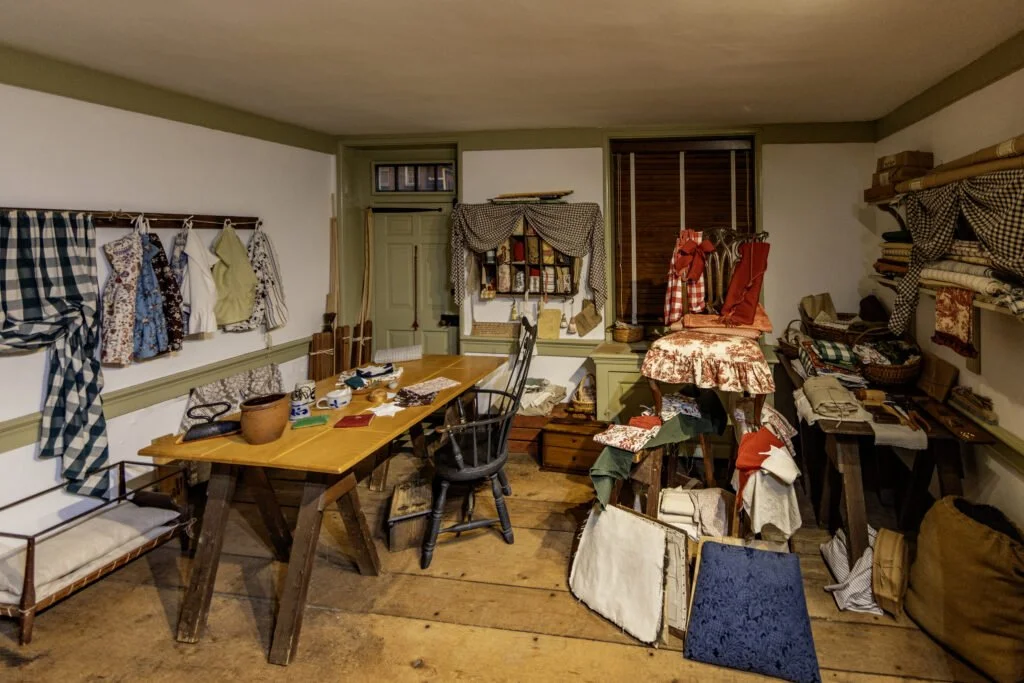
At the Betsy Ross House in Pennsylvania, her colonial home is preserved into what her space may have looked like as a busy upholsterer.
Following the loss, Ross had to pivot into a sole-ownership of the once-shared business. She continued creating, sewing, and mending, but this wasn’t out of the goodness of her heart or a sentimental nod to her late husband: it was survival.
Being a widow in the 1700s, cut off from her family, her business was all the power she had. Marriage for women was not just an act of love, it was an economic standing. Being a widow? Not exactly what you want on your financial report.
Having a business of her own, Ross stayed busy and stayed successful—so successful, in fact, that this is when Washington allegedly came to her asking about that special project.
She eventually married again and had two children with a man named Joseph Ashburn. But once again, five years into their marriage, Ashburn died while imprisoned in Great Britain.
For about a year, Ross was a widowed, single mother. But her business stayed steady, because it had to. As a new mother, there was no other option.
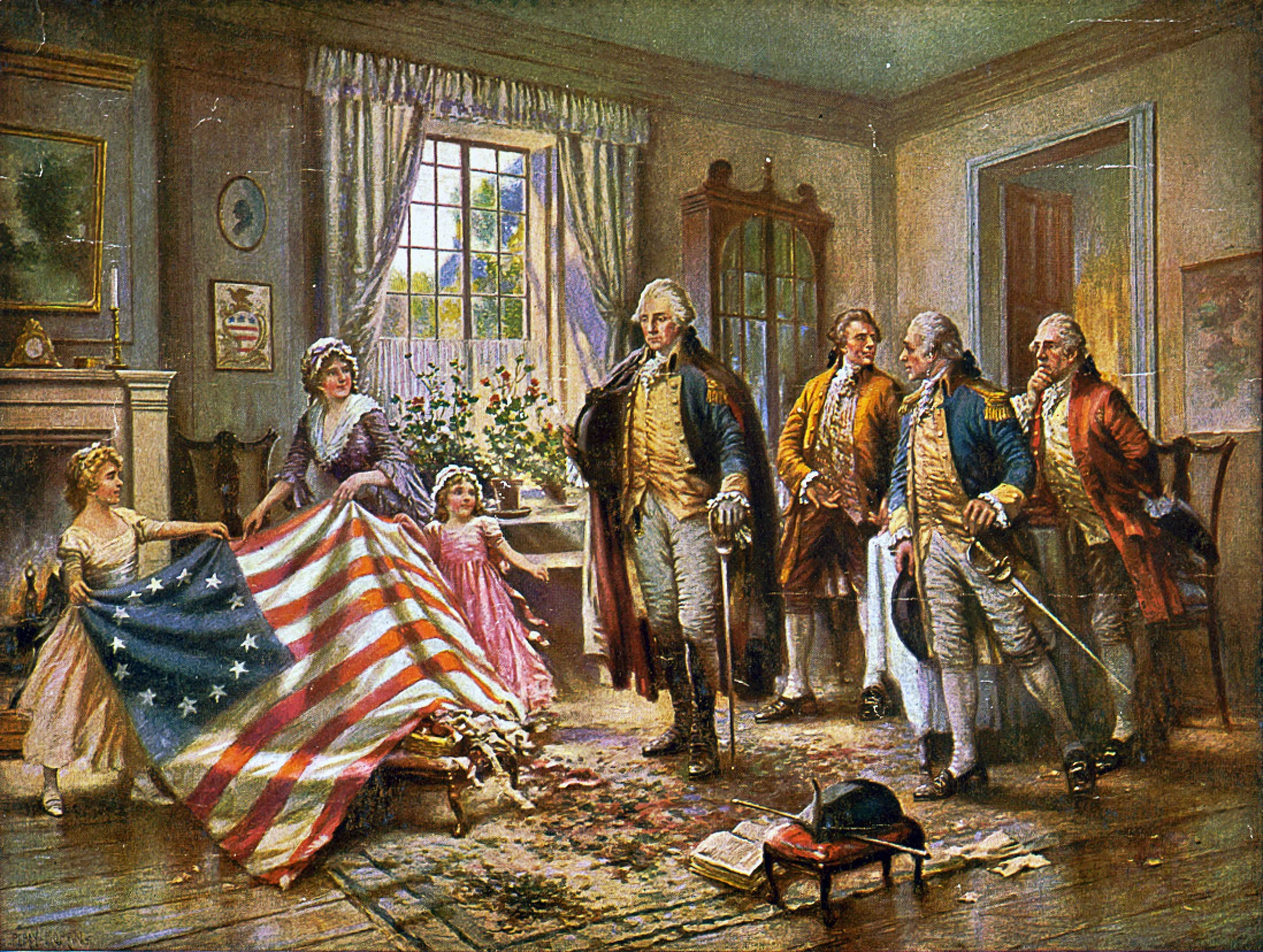
The Birth of Old Glory, circa 1917, depicts Betsy Ross presenting the "Betsy Ross flag" to George Washington next to what seems to be her children.
She married one final time to John Claypoole, the man her previous husband, Ashburn, was imprisoned with before passing. After these love stories and misfortunes, Ross was able to grow her family with Claypoole, and together they had five daughters over a thirty-four-year marriage.
Before passing away at eighty-four, Ross continued to sew and excel in her craft for the remainder of her life. She never stopped being a steadfast business owner fighting to carve a path for her and her family in a world that was largely against successful women.
In a battle for survival, she worked hard to stick to her craft and use it to stay alive, even when the world seemed to turn its back on her. Your story may not look like hers, but remember her dedication and perseverance in your next project, obstacle, or business endeavor.
